

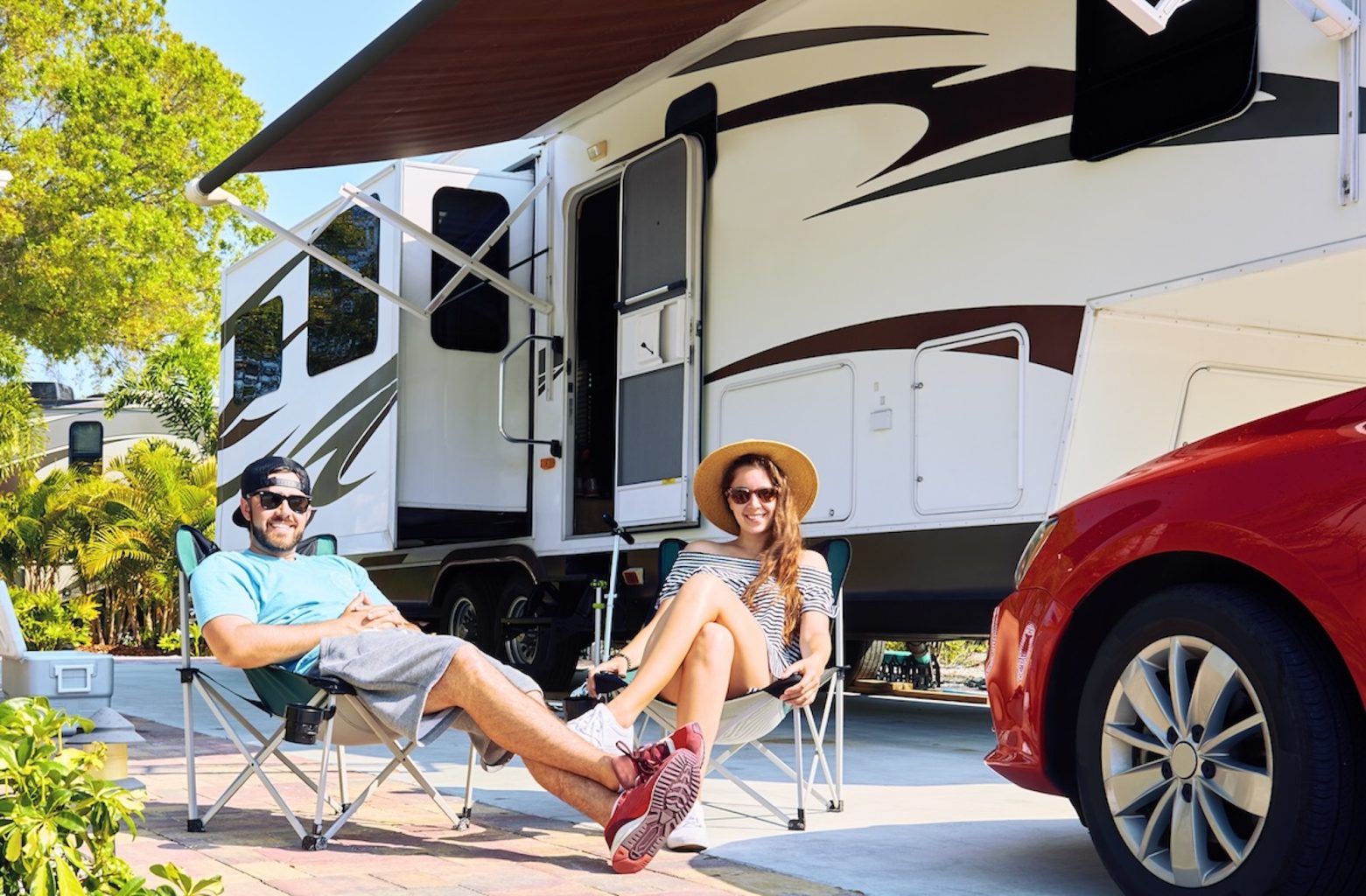
Shopping for an RV should be exciting, not overwhelming. However, with 6 different RV types, hundreds of floorplans, plus a plethora of amenities and features, it can be difficult to decide which is the best RV for you. I mean, how you know which one of the thousands of RVs on the market is going to work for your unique needs? In this guide, I’ll break down how to choose an RV you’ll be happy with. As part of an ongoing series, this article will take a look at key considerations for purchasing an RV. We’ll also look at the benefits and drawbacks of each RV type. My goal is to help you avoid the mistake of spending a lot of money on an RV that you’re not happy with.
Why Choosing The Right RV Matters
RVs aren’t cheap. Unless you have deep pockets, buying the perfect RV the first time will save you a lot of of money. With that said, no matter what your budget or camping style is, there’s an RV out there that’s perfect for your particular camping style.
Whether you’re considering upgrading to an RV after a lifetime of tent camping, or planning to dive into full time RV life, choosing the perfect RV the first time will save you a lot of money. The problem is choosing the right RV can seem a little overwhelming because there are just so many to choose from. With 6 basic RV types represented by thousands of different RV models, there’s something for every camping style.
Key Considerations
- Budget –
- Primary usage
- Where do you intend to camp
- Floor space
- Number of sleeping spaces
- Amenities and features
- Storage
- Off grid Sustainability
- 4 Season capabilities
- Wet vs dry bath
- Where will you store the RV when it’s not being used?
RV Classes And Best Uses
Whether you gravitate towards cross country road trips, off-grid camping, glamping at an upscale RV resort, or any combination of these camping styles, the first thing you’ll want to do is define your camping goals. If your idea of RVing is weekend camping trips with the family, your needs will be different from someone who wants to leave the RV parked at a southern resort as a winter destination.
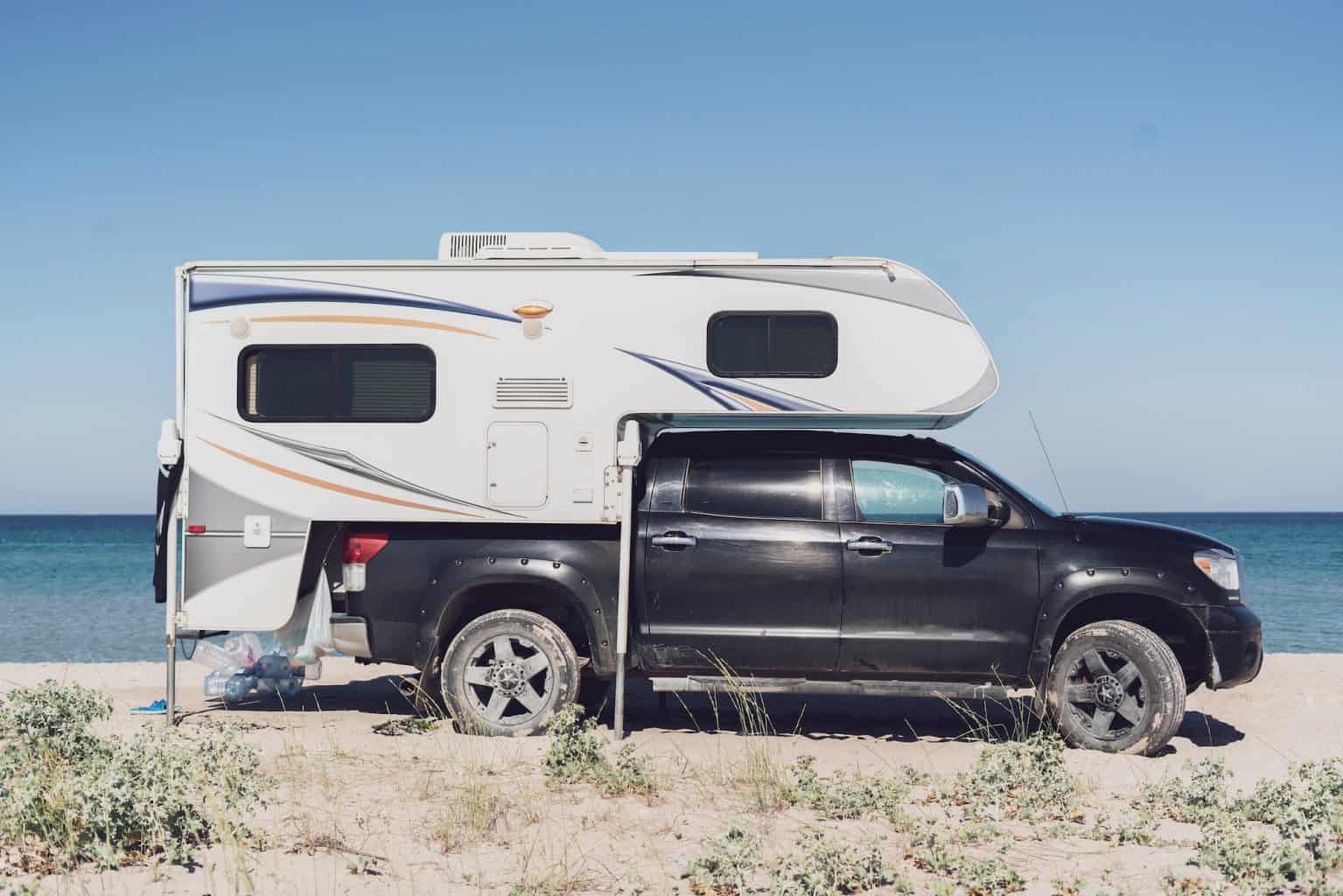
Truck Campers
My first camper was a small, basic truck camper that I bought for a few hundred dollars from some friends who no longer used it. When I say basic, I mean it. It had a miniscule kitchenette with a cooktop and sink, a dining table that converted into a double bed, and a queen bunk. Nonetheless, It was a fun little camper that my kids, 2 dogs, and I made good use of on a big cross country road trip as well as off road camping near Squamish.
Truck campers have come a long way since those days. Although you won’t find any with a washer and dryer, most truck campers now boast a wet bath, and some even offer a dry bath, with a separate shower for a more residential ambience. Some offer a microwave and a gas oven as well as an LED TV and solar power system
Average MSRP:
- New truck campers: $15,000 CAD to $85,000 CAD
- Used: $10,000 CAD to $40,000 CAD
Best For:
- RV Beginners
- Off grid camping
- Road Trips
Pros:
- Compact and easy to store
- No setup required- everything is ready to go when you get there
- Accomodations wherever you go
- Lots of amenities
- Often have a shower and a cassette toilet
- Sleep up to 4
Cons:
- Limited floorspace
- Sleeping accommodations are limited
- Not a lot of storage space
- Limited amenities compared to other RV types
- Access to the main sleeping area will require agility
- if you’re on a road trip and the truck needs service, the camper has goes to the mechanic with it.
- Your home on wheels goes everywhere with you.
- tiny holding tanks
Travel Trailers
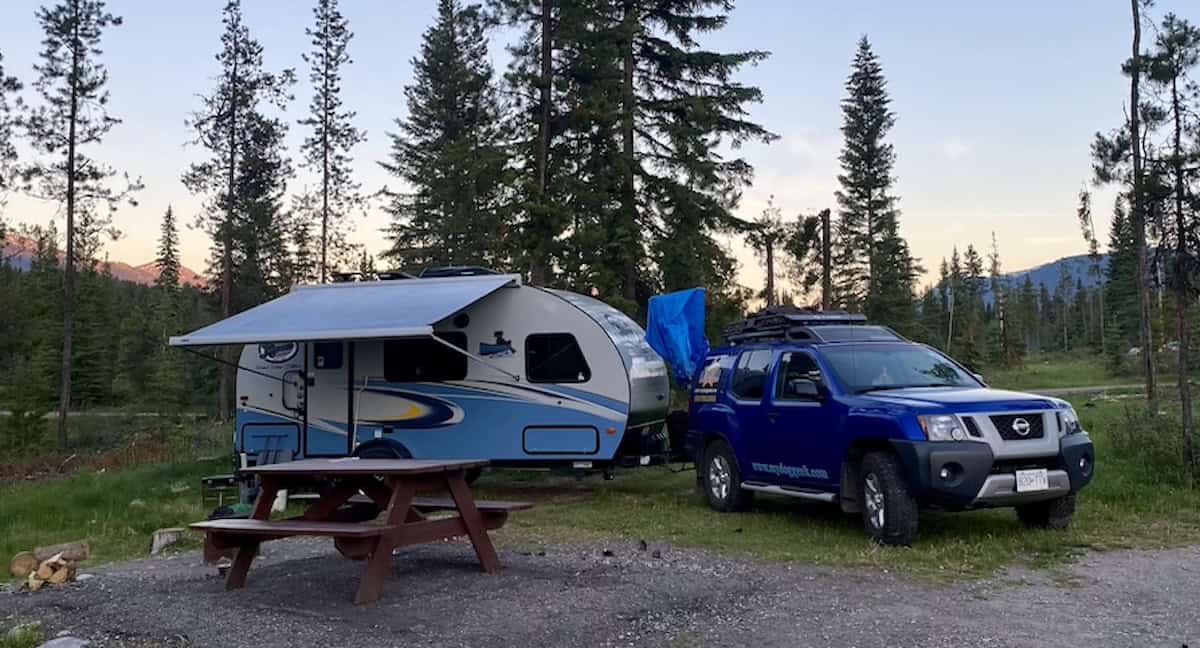
I love travel trailers because-well, that’s all in the name. Travelling with a travel trailer allows you to enjoy luxurious amenities and most of the comforts of home whether your at camp or traveling across the country. One of the best things about a travel trailer is that they’re so versatile. You can get a travel trailer to suit virtually any size of tow vehicle, from a motorcycle to a 1 ton pickup. Plus, when your home on the road is a travel trailer, you can leave it at camp while you take off to explore the local sights and attractions. Of course, travel trailers have a few drawbacks too. The first of these is that these tiny homes on wheels require time an patience to learn how to tow back into a campsite.
Average MSRP (CAD):
- Tent trailers: $15,000
- Lightweight Seamless Fibreglass trailers: $16,000 +
- Entry level hard sided: $25,000-$60,000
- Large luxury models with premium features: $100,000+
Best For:
- Road trips
- Weekend camping trips in summer
- Extended use for work accommodations
- Accomodation for skiing or other winter activities
- Mobile guest suite for visiting family or friends
- Snowbirding
- Camping at national, provincial or state parks
- Off grid camping in the middle of nature
- Full time RV life
Pros
- Relatively low cost
- Available in a wide range of sizes and configurations
- Often loaded with amenities including air conditioning
- Smaller ones can be towed with a small SUV or pickup
- Teardrop versions can be towed with a car (some are motorcycle towable)
- Don’t have to break camp to explore the local attractions or run errands
- Large holding tanks make off grid life convenient
- No stairs inside
Cons
- Learning to tow and back can have a steep learning curve
- Large travel trailers require a vehicle that has adequate towing and payload capacity
- Not as stable to tow as a fifth wheel
- Often require weight distribution hitch and sway bars for safe towing
- Easy for thieves to steal if not locked with multiple locks
- HOA rules might not allow them to be stored at home
- Need to pay for insurance for the RV and the tow vehilcle
- Cargo carrying capacity limitations
- Not self contained
Fifth Wheel Trailers
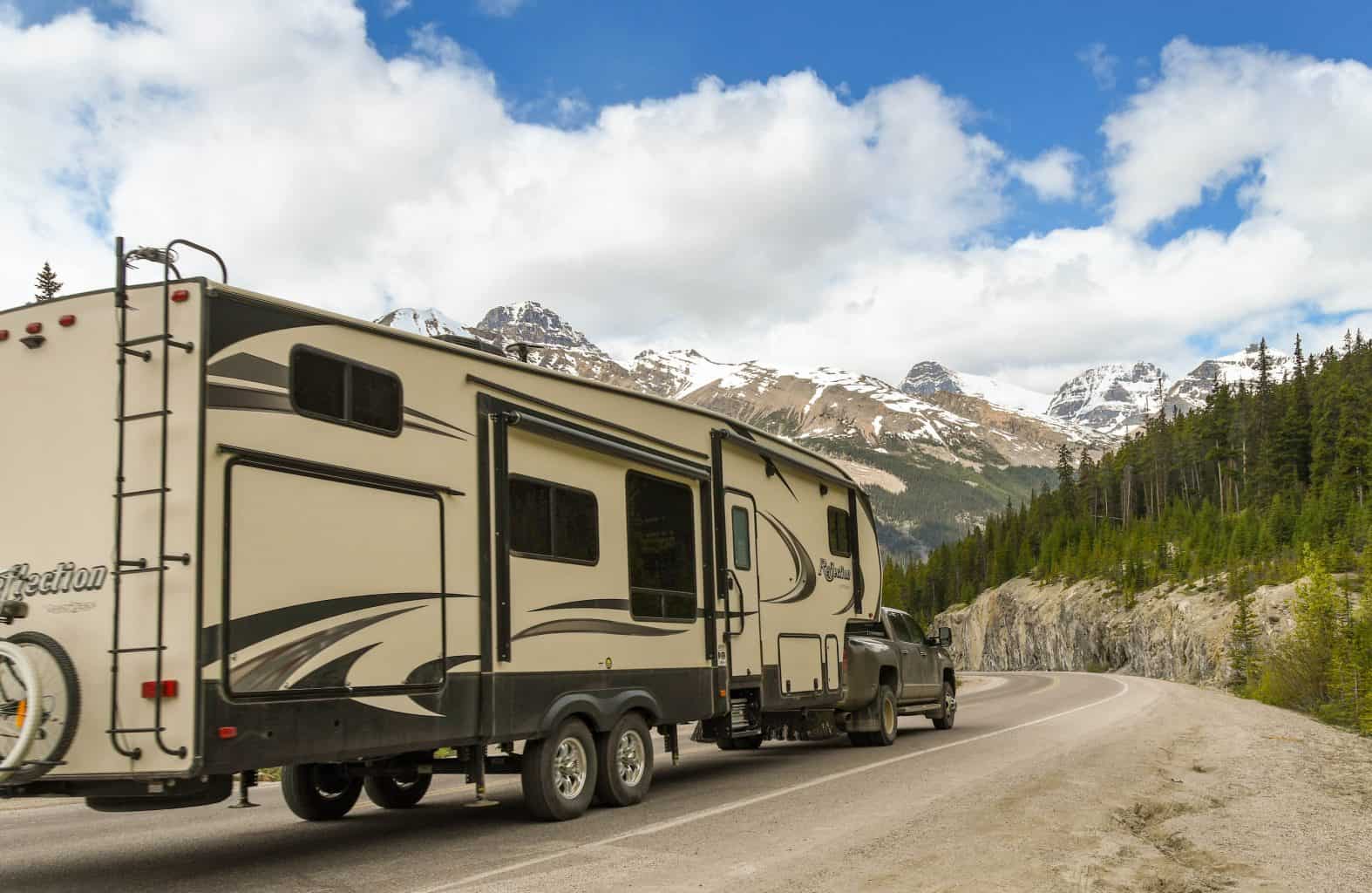
Fifth wheel trailers feature lots of space and all the comforts of home on two levels. Designed for extended use, they’re perfect for those looking for a luxurious home on wheels that’s a sensible alternative to a tiny home. As an added bonus, fifth wheels typically offer a more stable towing experience than travel trailers, owing to different hitch components. It should be noted that most fifth wheels are hefty beasts, and most of them are best towed by a 3/4 ton or better tow vehicle.
Average MRSP : $70,000 – $150,000
Best For
- Road trips
- Weekend camping trips in summer
- Extended use for work accommodations
- Accomodation for skiing or other winter activities
- Mobile guest suite for visiting family or friends
- Snowbirding at full hookup RV parks
- Full time RV living
Pros:
- Loaded with premium amenities and features
- More stable towing experience
- Large tank capacities
- Residential ambience
- Usually have an island kitchen
- Self contained bedroom
- One or more full bathrooms
- Spacious inside
- Lots of storage inside and outside
Cons
- Towing often requires a 3/4 ton or better pickup
- Long and tall- drivers should have prior towing experience
- Can be difficult to navigate around campground and RV resort roads
- Won’t fit into some campsites
- Fuels costs for transport are high
- Need to pay for insurance for the RV and the tow vehicle
- Not self contained
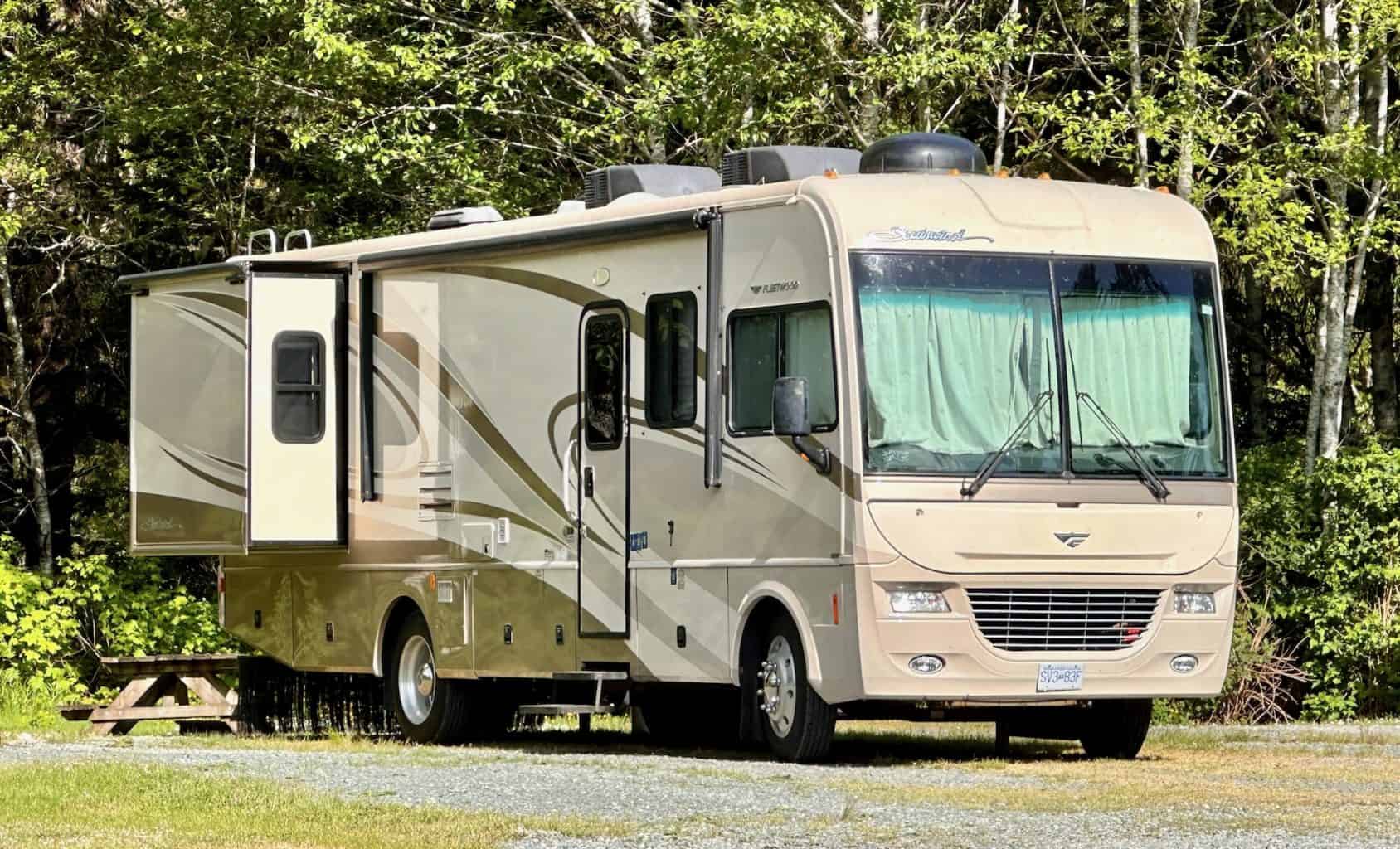
Class A RVs
Class A motorized RVs are built on a bus chassis with either two or 3 axles. In a Class A RV the driver and co-pilot sit over the front axle. This positioning offers an awesome view of the road and everything happening on it. Class A RVs are classified as either gassers (motor at the front) or diesel pushers (motor at the back). Class A gassers generally have higher ground clearance, and lower towing capacity than their diesel pusher counterparts. Either way, these RVs are ready to for the open road, with very little set up required when you reach your destination. Both types of Class A RV are designed to provide a lot of residential style luxury. However diesel pushers often feature heavier amenities like bar cabinets, residential light fixtures, Italian tile floors and granite counter tops
Average MRSP: $160,000 to $3,000,000+
Best For:
- Extended travel
- Full time RV living
- RV parks and some campgrounds
- Off grid glamping
Pros
- Completely self contained
- Lots of luxurious amenities
- Loads of interior and exterior storage
- Multiple air conditioners
- Capable of towing a second vehicle for exploring/errands
- Fantastic views from a high position
- Designed to keep you comfortable on or off grid
- Built in generator and inverter to run everything when you’re off grid
- Towing capacity allows
Cons
- Heavy duty mechanics can be hard to find when you need one
- Having a Class A RV towed for repairs is really expensive
- Mechanical bills can be very expensive, especially with a diesel coach
- Tall and long- can be difficult to navigate in some RV parks and campgrounds
- Extensive driving experience recommended
- Not stealthy at all for overnight camping
- Fuel economy: 6-8mpg
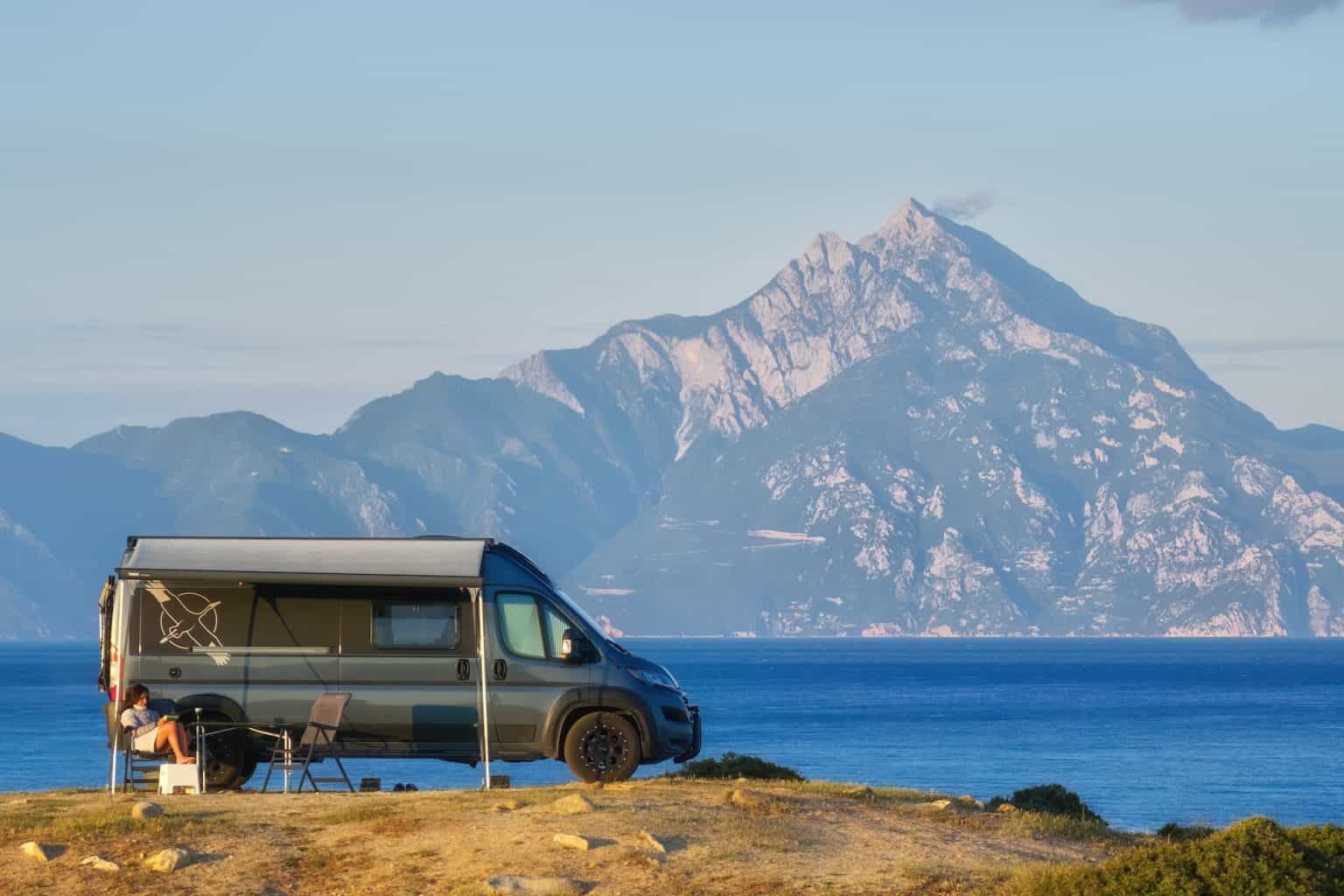
Class B Campers
The smallest motorized RVs are Class B RVs. Commonly known as campervans, class B RVs are often the choice of adventure seekers who want an RV they can also use as a daily driver. Campervans started gaining popularity in the 1960’s. The VW van in particular became a cultural icon representing the freedom and bohemian lifestyle of the hippie movement. After the 1960’s were over, campervans moved into the background of the cultural landscape, mostly as a niche vehicle for hippyish outdoor enthusiasts. Fast forward to 2020, when society slammed into the utter weirdness that was the so-called covid-crisis. It was about that time that Baby boomers, Gen Xers, and Millenials converged on RV dealerships, seeking options that would allow them to avoid contact with humanity, other than their close relatives. Camping was perfect. Thousands of Millennials discovered they could now work at online jobs from the comfort of an RV office anywhere in the country.
Class B RVs Offered Freedom For A New Generation
What RV would be more perfect for a generation that wasn’t ready to settle down just yet, than the Class B camper van? Although prebuilt vehicles were being sold like hotcakes at RV dealers, many of these digital nomads chose to buy vans, and build them out into customized homes on wheels. Building out a van yourself was a lot cheaper at a time when a nice Class B RV could cost as much as $300,000.
There are now numerous upfitters who turn Mercedes Sprinter or Ford Transit vans into custom Class B RVs. That’s because these RVs remain exceedingly popular. They offer more freedom than ever, with lift kits, popup roofs, solar power systems and the ability to park overnight so innocuously that nobody notices. Class B RVs remain the RV of choice for those who want to pursue a nomadic lifestyle while spending most of their time off grid. But with the right floor plan, a Class B can be a perfect daily driver and camper for families. Imagine taking your family camping, coming home, and then going a soccer tournament the next week completely prepared with accommodations, food, and everything else to get you through the weekend.
Average MRSP: $110,000 to over $300,000 USD
Pros
- Available with diesel, gas or electric chassis
- Have everything necessary to go off grid for a few days
- No setup necessary when you get to your campsite- everything’s ready
- Excellent view of the road
- Offer amenities including kitchen appliances, air conditioning solar power setups, charging ports, cassette toilets and showers
- Agile enough to get into small campsites
- Awning for additional living space outdoors
- Can tow a cargo trailer for additional storage
- Fuel economy: Gas: Up to 22-25 MPG ( Ford Transit chassis). Diesel: 15-18 MPG (Mercedes Sprinter chassis)
Cons
- Small floorspace can feel cramped, especially for more than one person
- Not as many luxury amenities as other types of RVs
- Very limited storage space for food, clothing and gear
- Have to break camp to run errands or go sightseeing

Class C RVs
Class C RVs are built on a cutaway van or truck chassis. Their recognizable by their bunk-over-the-cab configuration. Class C RVs are a great do-it-all RV for weekend camping, road trips or full-time RV life because they offer lots of features, amenities. as well as more floor area storage space than a Class B Campervan. Many RVers who are new to motorized RVs perceive them less intimidating to drive than comparable Class A RVs. With that said, most Class C RVs usually offer higher ground clearance than Class A RVs and some even feature lift kits, to get into more remote campsites.
Other than the common configuration of having a bunk over the cab, Class C RVs vary widely. Entry level Class C RVs are fairly spartan, compared to ultra-luxurious Super C RVs which are built on a heavy duty truck chassis.
Average MRSP:
The MRSPs of Class C RVs vary widely according to chassis type and fuel. The following is a breakdown of prices for new Class C RVs, sourced from RVTrader.com
- Budget/Compact (Gas): ~$70,000 – $130,000+
- Standard Gas/Diesel: ~$130,000 – $275,000+ (e.g., Jayco Redhawk/Greyhawk, Winnebago Spirit)
- Luxury/Specialty (Diesel/AWD): ~$215,000 – $300,000+ (e.g., Winnebago EKKO, Leisure Travel Vans Unity)
- Super C (Diesel): ~$150,000 – $600,000+ (e.g., Thor Magnitude, Jayco Seneca)
Best For:
- Entry level RV
- Camping off grid or with full hookups
- Family camping trips
- Weekend camping
- Road trips
Pros:
- Just like driving a pickup (but higher and longer)
- Relatively affordable
- Self contained
- Extra sleeping or storage space over the cab
- More affordable to maintain and repair than a Class A RV
- Lots of luxurious amenities
- Convenience of having access to the cabin from the interior
- Convenient setup
- Balance of Class A space and Class B versatility
- Towing capacity allows towing a second vehicle for sightseeing of running errands
Cons
- Fuel economy ranges between 7 MPG and 17MPG, depending on chassis and fuel type
- Floorspace: Can feel more cramped than a Class A
- May require steering stabilizers for better handling in windy conditions
- Less storage space than a Class A
- Maneuverability and tail swing
- Lower ride quality than Class B or most Class A RVs
- Less engine noise than gasser class A
- Not stealthy at all for overnight camping
Final Thoughts About Choosing The RIght RV For Your Needs
There’s no “one size fits all” when it comes to RVs. With that said, pinning down a budget you can live with, and having a rough idea of how your you’ll use your RV will go a long way to narrowing a broad field of potential RV models.
If you’re on the hunt for a family RV, I’m here to help you find one that you’ll be perfectly happy with. Subscribe to the RV Adventure Guide blog so you won’t miss upcoming articles. In the following weeks, we’ll looking be looking at every aspect of buying an RV, from identifying the right RV, to negotiating the best deal on an RV.
/

Lynne Fedorick is an RV expert and experienced outdoor author who has written hundreds of articles for RV Life, RV Trader, and other leading publications. She evaluates RV gear, portable power systems, and emergency preparedness equipment for real-world RV travel. Lynne is the founder of RVAdventureGuide.com, offering RV travel tips, reviews, and destinations from a uniquely Canadian perspective.

Recent Comments